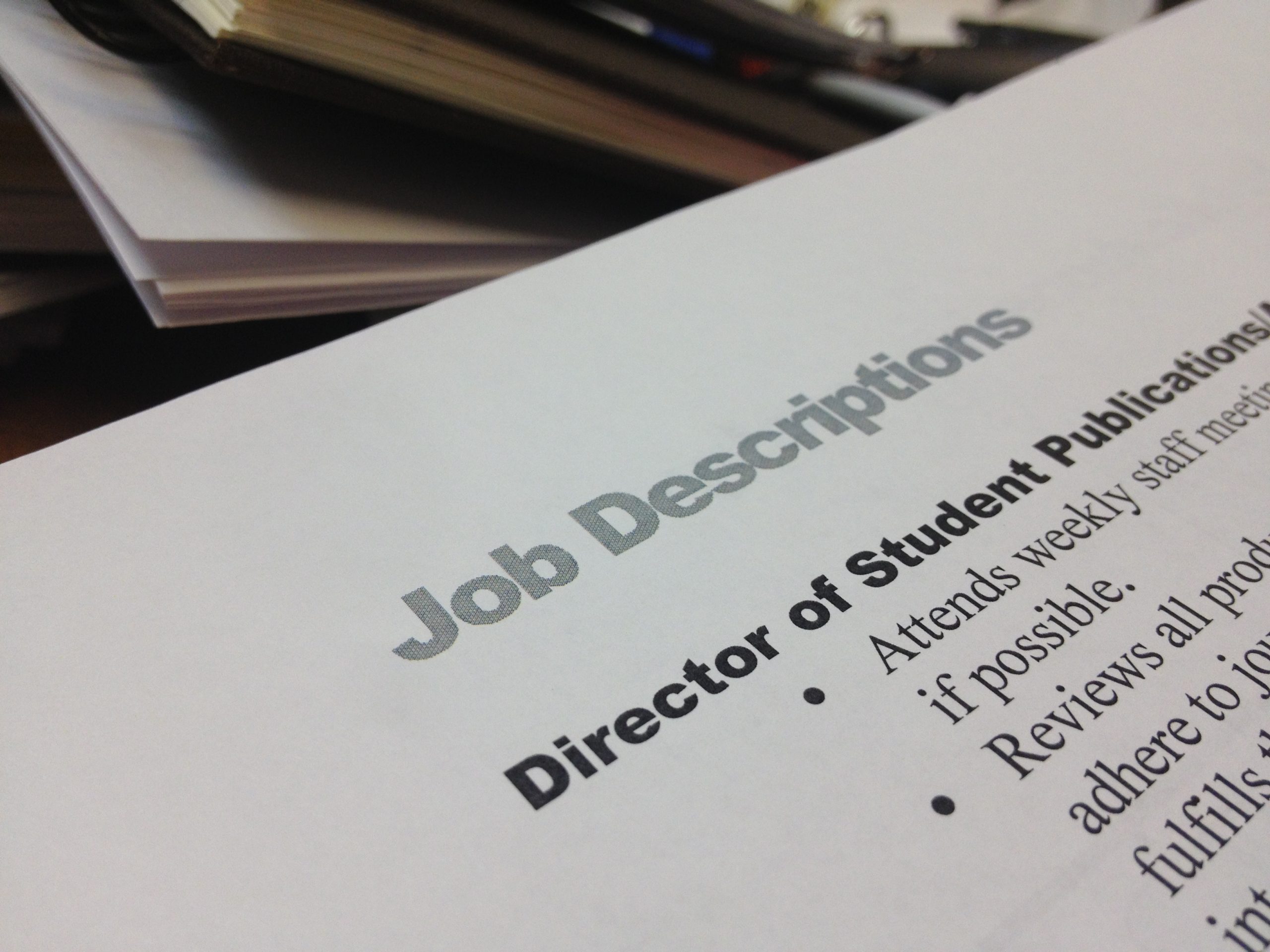
One of the first things I did when I became a collegiate media adviser was write a publications manual, complete with job descriptions for the staff.
 Honestly, I was surprised job descriptions didn’t exist. It seemed counter not to provide employees with clear expectations of their roles. They aren’t mind readers, after all, and I certainly had clear concepts of what their jobs entailed. It went a bit like this in my mind: write strong job descriptions, communicate them with the staff, then sit back and swell with pride as they succeed.
I’ve threatened to destroy the job descriptions at least once a semester since I wrote them almost a decade ago. The most common reason—the “it’s not my job” attitude.
Let me set the record straight here. Your job description is an overview of the requirements of your position. It’s a sketch, an outline of the tasks you must perform. Technically, your boss cannot make you perform beyond your job description. So, if you like your job and you’re not interested in ever being promoted or admired by your bosses and peers, keep trudging along. I also should warn you here that as soon as your company needs to make cuts (a common occurrence in today’s newsrooms) or the moment you slip below the threshold of your absolute musts, you’re likely to get canned.
In a newsroom (campus or otherwise), your job is to perform the tasks necessary to create the best product possible on deadline. Sticking to your job description in the newsroom is a sure way to be rebuffed by colleagues and guarantee you’ll get the worst assignments.
In a collegiate newsroom, your job isn’t just to produce content. The primary purpose of your job is learning. You will learn most if you’re willing to take on a variety of roles, jobs and tasks. You also earn the attention and respect of faculty who will assist you in networking and help you get your first (and likely beyond) job.
Those relationships can work the opposite way as well. You will earn a terrible reputation if you act as if you’ve earned a role or some privilege in the newsroom. This will impact your opportunities at the collegiate level and make faculty and peers reluctant to recommend you for scholarships, internships and jobs. Plus, they probably just won’t like you much. Who wants to be that students who everyone is ready to see graduate?
The next time you stop to think about whether something is “your job,” consider the impression the attitude makes. Is that the way you want to start your career?
You have four years to pack in all of the learning and experience possible in an environment where it’s perfectly acceptable to fail, but it’s a sin to be too lazy or pretentious to try.
Don’t just take up space in the newsroom. There’s too much to experience. Success now will reap rewards later. Take full advantage of the opportunity to learn and grow as much as possible. It’s an exciting and inspiring job description.
Real Nerds Read!
Check out the One Sentence You Should Never Say at Work. I bet you already have an idea about the subject, but this post will tell you more about how this attitude negatively impacts your professional brand.